
Why Hands-On Training is Essential in Aircraft Maintenance Engineering
Aircraft Maintenance Engineering (AME) is one of the most practical and responsible careers in the aviation industry. While classroom learning provides the theoretical foundation, hands-on training is what transforms students into skilled professionals capable of maintaining and certifying aircraft for safe operation. Every aircraft that takes to the skies depends on the expertise of licensed Aircraft Maintenance Engineers who inspect, repair, and maintain complex aircraft systems.
Growing Industry Demand for Practical Skills
As the aviation industry continues to grow, airlines and aviation organizations are looking for professionals who possess both technical knowledge and practical experience. This is why hands-on training has become one of the most important aspects of any DGCA-approved Aircraft Maintenance Engineering course.
What is Hands-On Training in Aircraft Maintenance Engineering?
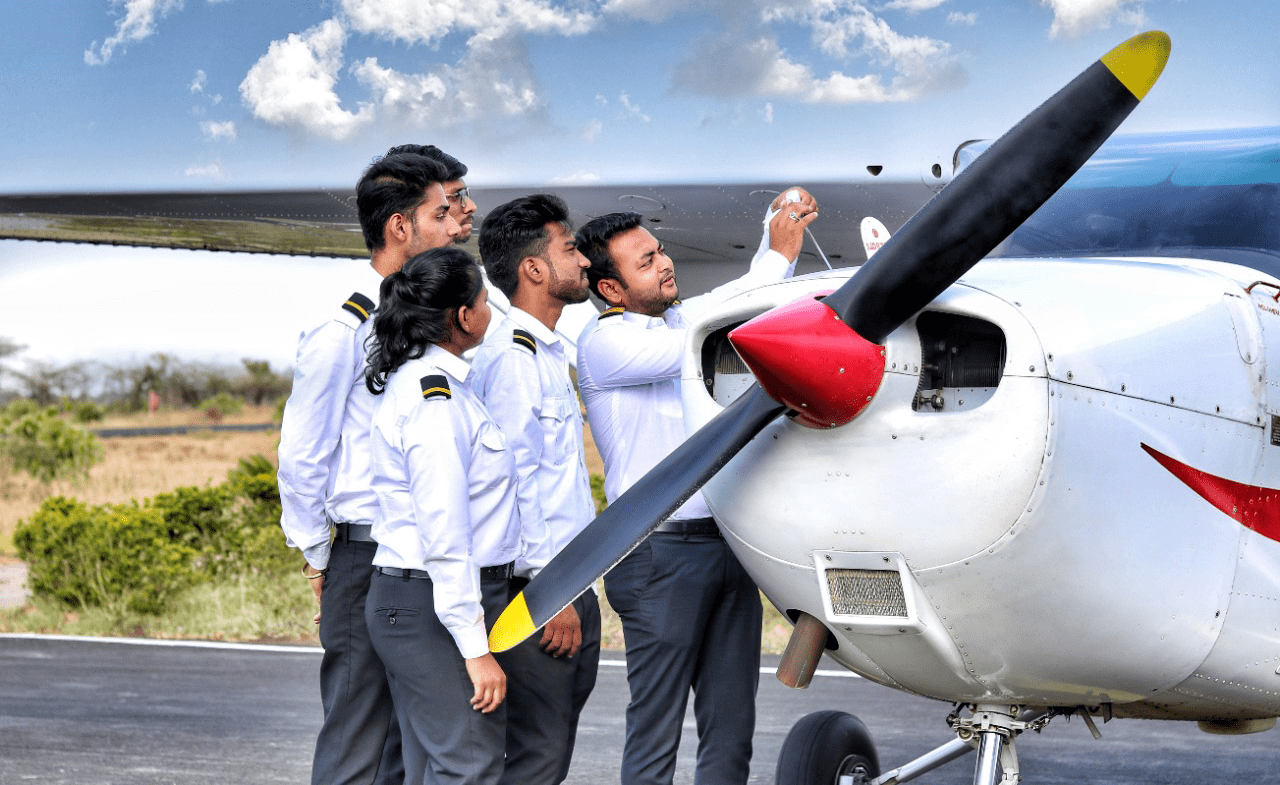
Hands-on training refers to practical learning where students work directly with aircraft, aircraft components, tools, and maintenance equipment under the supervision of experienced instructors. Instead of only studying aircraft systems through textbooks, students learn how to:
- Inspect aircraft structures
- Diagnose mechanical and electrical faults
- Repair aircraft components
- Perform scheduled maintenance
- Use aviation tools and testing equipment
- Follow DGCA-approved maintenance procedures
- Complete aircraft documentation and maintenance records
This practical exposure prepares students for real-world aviation environments.
Builds Technical Confidence
Aircraft systems are highly sophisticated and require precision during maintenance. Practical sessions help students understand how different systems function together and build confidence in handling actual maintenance tasks. The more time students spend working on aircraft, the more comfortable they become in identifying issues and solving them efficiently.
Converts Theory into Real-World Skills
Understanding aircraft engines, hydraulics, avionics, landing gear, and electrical systems in a classroom is important, but practical experience helps students visualize and understand these systems in action. Hands-on training bridges the gap between theoretical concepts and real-life aircraft maintenance.
Why Choose a DGCA-Approved AME Institute?
A DGCA-approved Aircraft Maintenance Engineering institute follows industry-approved training standards that combine classroom education with extensive practical learning. Students benefit from:
- Modern aircraft maintenance laboratories
- Practical training on aircraft systems
- Experienced aviation faculty
- Industry-oriented curriculum
- DGCA-compliant training
- Individual attention
- Strong placement support
Develops Problem-Solving Ability
Aircraft maintenance rarely follows a fixed pattern. Engineers frequently encounter unexpected technical issues that require quick analysis and accurate decision-making. Practical training helps students learn how to:
- Identify faults
- Perform troubleshooting
- Analyze maintenance reports
- Implement safe repair procedures
- Verify aircraft performance after repairs
These skills are critical in aviation safety.
Enhances Safety Awareness
Safety is the highest priority in aviation. Even a small maintenance mistake can have serious consequences. During practical training, students learn:
- Aircraft safety procedures
- Tool handling techniques
- Maintenance documentation
- Quality inspections
- Risk assessment
- Safety regulations prescribed by DGCA
This develops a strong safety-first mindset throughout their careers.
Familiarity with Modern Aircraft Equipment
Modern aircraft use advanced technology, digital monitoring systems, avionics, and sophisticated diagnostic equipment. Hands-on training allows students to become familiar with:
- Aircraft engines
- Electrical systems
- Avionics
- Hydraulic systems
- Landing gear assemblies
- Fuel systems
- Navigation equipment
- Aircraft maintenance software
Learning these technologies improves employability after graduation.
Final Thoughts
Hands-on training is the foundation of a successful career in Aircraft Maintenance Engineering. While theoretical knowledge explains how aircraft systems operate, practical experience teaches students how to inspect, repair, maintain, and certify aircraft safely and efficiently.