The aviation industry is one of the fastest-growing sectors globally, offering exciting career opportunities in airlines, airports, ground handling services, aircraft maintenance, customer service, and cabin crew operations. As the industry continues to expand, employers are increasingly looking for candidates who possess the right skills, knowledge, and professional qualifications.
One of the most effective ways to stand out in the competitive aviation job market is by obtaining recognized aviation certifications. Whether you aspire to become an air hostess, airport ground staff professional, aircraft maintenance engineer, or aviation operations specialist, certifications can significantly improve your employability and career prospects.
What Are Aviation Certifications?
Aviation certifications are professional qualifications awarded after completing specialized training programs in various aviation disciplines. These certifications validate an individual's knowledge, practical skills, and readiness to work in the aviation sector.
Some popular aviation certifications include:
- Air Hostess and Cabin Crew Certification
- Airport Ground Staff Certification
- Aviation Hospitality Certification
- Aircraft Maintenance Engineering (AME) Certification
- Airport Operations Training Certification
- Customer Service and Passenger Handling Certification
- Aviation Safety and Security Certification
These certifications are designed according to industry standards and help candidates meet employer expectations.
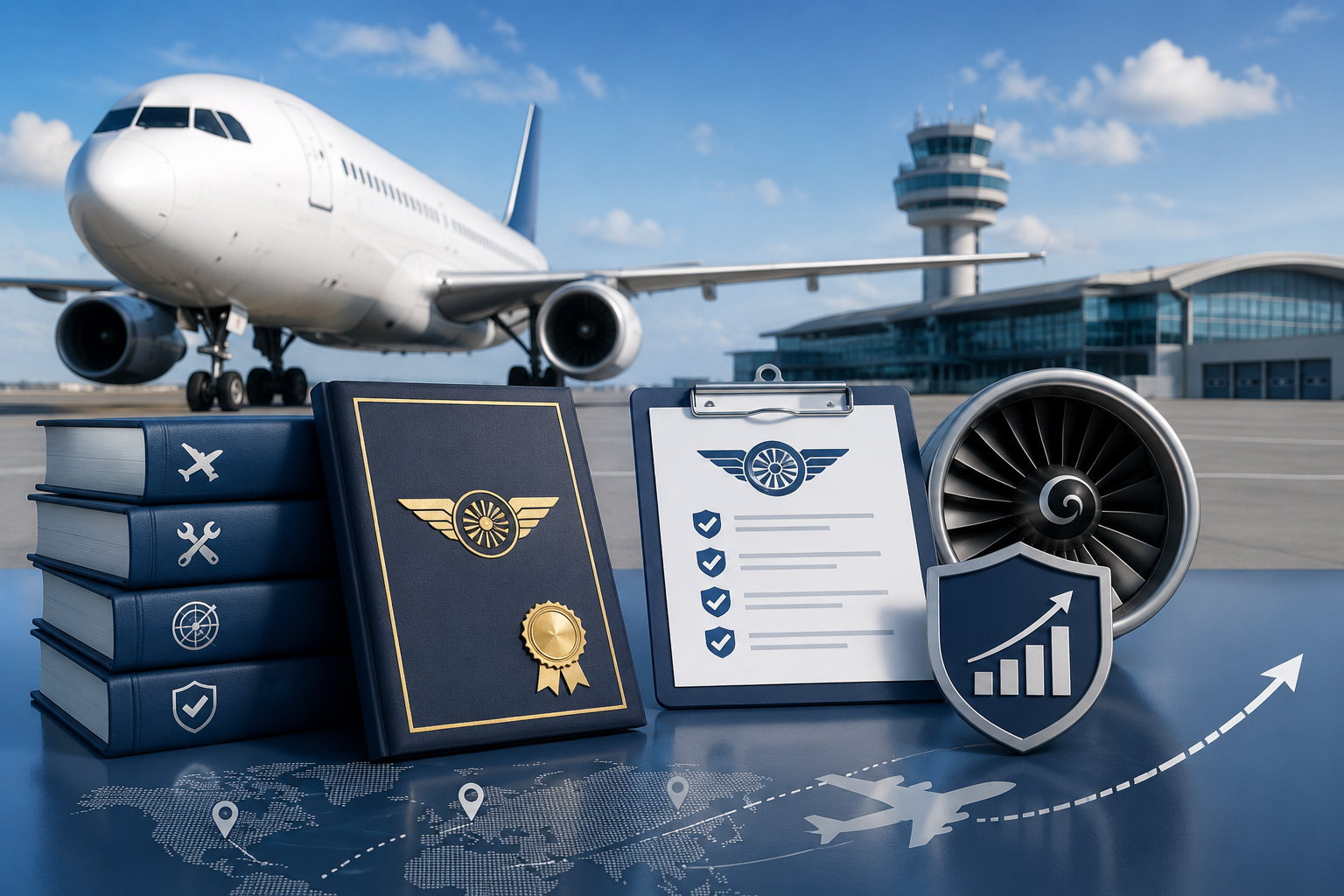
Why Aviation Certifications Matter
The aviation industry operates in a highly regulated environment where safety, efficiency, and customer satisfaction are critical. Employers prefer candidates who have undergone structured training and possess certifications that demonstrate their competency. Aviation certifications provide evidence that a candidate has received professional training and understands industry practices, making them more attractive to recruiters.
1. Demonstrate Professional Knowledge
Aviation certification programs provide comprehensive knowledge about airline operations, airport procedures, safety protocols, customer service standards, and industry regulations. When employers see a certified candidate, they gain confidence that the individual understands the fundamentals of the aviation industry and can contribute effectively from day one.
2. Increase Job Opportunities
Many airlines, airports, and aviation service providers prioritize certified candidates during recruitment. Having a recognized certification can make your application stand out among numerous applicants.
Certified professionals often have access to opportunities in:
- Airlines
- International airports
- Ground handling companies
- Aviation service providers
- Travel and tourism organizations
- Cargo and logistics companies
3. Build Industry-Relevant Skills
Aviation training programs focus on practical skills that employers value, including:
- Passenger handling
- Communication skills
- Customer service excellence
- Airport operations
- Emergency response procedures
- Grooming and professional etiquette
- Teamwork and leadership
These skills enhance workplace readiness and improve job performance.
4. Improve Confidence During Interviews
Candidates with aviation certifications often feel more confident during interviews because they possess industry-specific knowledge and practical training. Certification programs typically include mock interviews, personality development sessions, communication training, and grooming workshops that help students present themselves professionally to recruiters.
5. Meet Industry Standards
The aviation sector follows strict operational and safety standards. Certification programs are designed to align with these industry requirements. Employers prefer candidates who already understand aviation procedures, reducing the time and resources needed for additional training after hiring.
Choosing the Right Aviation Certification Program
When selecting an aviation training program, consider factors such as:
- Industry-recognized curriculum
- Experienced faculty
- Practical training facilities
- Placement assistance
- Industry exposure
- Communication and grooming development
- Modern training infrastructure
A quality certification program should combine theoretical learning with hands-on practical experience to ensure career readiness.
Why Aviation Careers Are Growing
India's aviation industry is experiencing remarkable growth due to:
- Expansion of domestic and international airlines
- Development of new airports
- Increased passenger traffic
- Growth in tourism and business travel
- Rising demand for customer-focused aviation services
As the industry expands, certified aviation professionals will continue to be in high demand.
Conclusion
Aviation certifications play a crucial role in improving employability by equipping candidates with industry-relevant knowledge, practical skills, and professional confidence. Whether your goal is to become an air hostess, airport ground staff professional, or pursue other aviation careers, certification can provide a significant advantage in a competitive job market.
With the aviation sector offering exciting career opportunities and strong growth potential, investing in professional aviation training and certification is a smart step toward a rewarding and future-proof career.